What Is the Connections Hint?
The rise of daily word puzzles has transformed how people engage with language, logic, and pattern recognition. Among these puzzles, the “Connections” game has quickly become a favorite for players who enjoy spotting relationships between words. As the game’s popularity grows, so does the search for helpful clues—commonly referred to as the connections hint.
This article explores what the connections hint is, how it works, and why terms like nyt connections hint, connections hint today mashable, and mashable connections hint today are trending among puzzle enthusiasts.
Understanding the Connections Game
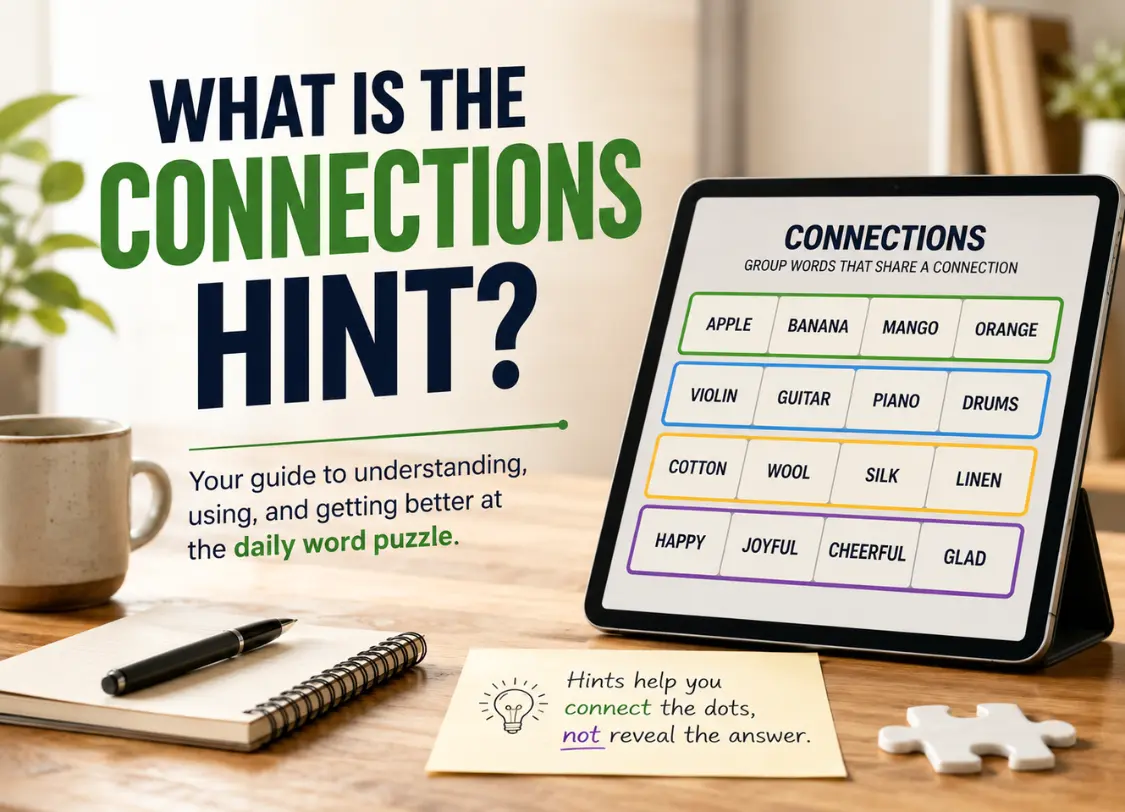
Before diving into hints, it’s important to understand the puzzle itself. The Connections game challenges players to group a set of words into categories based on shared relationships. These relationships can be straightforward or highly abstract, making the game both engaging and mentally stimulating.
Each puzzle typically includes 16 words, and the player must organize them into four groups of four. The difficulty lies in identifying the correct connections while avoiding misleading associations.
Unlike traditional crossword puzzles, Connections relies heavily on lateral thinking. This is where hints become especially valuable.
What Is a Connections Hint?
A connections hint is a clue or subtle nudge designed to help players solve the daily puzzle without directly giving away the answers. These hints often guide players toward recognizing patterns or categories they may have overlooked.
Hints can vary in specificity. Some provide general direction, such as suggesting a theme, while others may point toward a particular grouping logic.
For example, a hint might suggest:
- “Think about types of fabrics”
- “Consider words related to emotions”
These clues help narrow down possibilities without spoiling the challenge.
Why Players Search for “NYT Connections Hint”
The phrase nyt connections hint has become widely searched because many players turn to external sources when they get stuck. Since the game is associated with a major daily puzzle provider, players often expect reliable and timely hints.
People typically search for hints when:
- They want to maintain their winning streak
- They are stuck on the final group
- They want to learn how connections work
Hints allow players to continue enjoying the puzzle without frustration.
The Role of Daily Hint Platforms
Several platforms provide daily hints, and phrases like connections hint today mashable and mashable connections hint today highlight how users rely on curated hint sources.
These platforms usually publish:
- Daily puzzle breakdowns
- Progressive hints (from vague to specific)
- Full answers (hidden below hints)
This structured approach allows players to choose how much help they need.
Types of Connections Hints
Not all hints are created equal. They generally fall into a few categories depending on how much assistance they provide.
1. General Theme Hints
These hints provide a broad idea of one or more categories without revealing exact answers. They are ideal for players who want minimal help.
2. Category-Based Hints
These are more specific and may describe the relationship between words, such as “types of animals” or “synonyms for fast.”
3. Word-Level Hints
These hints may point to specific words that belong together but stop short of revealing the entire group.
4. Direct Answers
Although technically not hints, some platforms include full solutions for players who are completely stuck.
How to Use Connections Hint Effectively
Using hints wisely can improve your puzzle-solving skills rather than diminish the challenge. The key is moderation and strategy.
Instead of jumping straight to answers, start with a vague hint. Try to solve the puzzle using that clue alone. Only move to more detailed hints if necessary.
This approach helps you:
- Strengthen pattern recognition
- Improve logical thinking
- Learn common grouping strategies
Common Patterns in Connections Puzzles
Understanding recurring patterns can reduce your reliance on hints over time. Many puzzles follow familiar structures.
| Pattern Type | Description | Example Idea |
| Synonyms | Words with similar meanings | Happy, Joyful, Glad |
| Categories | Items belonging to the same group | Apple, Banana, Mango |
| Wordplay | Hidden meanings or double interpretations | Bark (tree/dog) |
| Prefix/Suffix | Words sharing a linguistic feature | Unhappy, Undo, Unfair |
| Pop Culture | References to media or trends | Movie titles, characters |
Recognizing these patterns can significantly reduce the need for external help.
Why “Connections Hint Today” Trends Daily
The keyword connections hint today reflects the daily nature of the puzzle. Since a new challenge appears every day, players frequently look for updated hints.
This daily cycle creates a consistent search pattern:
- Morning: Players attempt the puzzle
- Midday: Searches for hints increase
- Evening: Full answers become more popular
The time-sensitive nature of the game fuels ongoing interest in hints.
The Influence of Mashable and Similar Platforms
Search terms like connections hint today mashable and mashable connections hint today show how certain platforms have become trusted sources for puzzle assistance.
These platforms stand out because they:
- Provide structured hints
- Update content daily
- Offer clear explanations
Their content is designed to balance challenge and assistance, making them popular among both beginners and experienced players.
Benefits of Using Connections Hints
While some purists prefer solving puzzles without help, hints offer several advantages when used thoughtfully.
- They reduce frustration and keep the game enjoyable
- They help players learn new patterns and categories
Hints can transform a confusing puzzle into a learning experience rather than a dead end.
Downsides of Overusing Hints
Relying too heavily on hints can take away from the satisfaction of solving puzzles independently. It may also slow the development of critical thinking skills.
Players who frequently skip to answers may miss out on:
- The joy of discovery
- Skill improvement
- Long-term engagement
Balance is essential.
Tips to Solve Without Immediate Hints
To reduce dependency on hints, players can adopt certain strategies.
Start by scanning all 16 words and identifying obvious connections. Even forming one correct group can make the rest easier.
Look for:
- Words with similar meanings
- Words that belong to a clear category
- Unusual or standout words
If stuck, take a short break and return with fresh eyes. Often, the connection becomes clearer after a pause.
How Connections Hint Improves Learning
Interestingly, using hints can enhance vocabulary and cognitive skills when approached correctly. Players are exposed to new word relationships and patterns they may not have considered before.
Over time, this leads to:
- Better language comprehension
- Faster problem-solving
- Improved memory retention
Hints act as a guided learning tool rather than just a shortcut.
The Psychology Behind Puzzle Hints
Humans naturally seek assistance when faced with challenging tasks. The connections hint satisfies this need by offering just enough help to keep players engaged.
This balance between difficulty and support is what makes the game addictive. Too easy, and it becomes boring; too hard, and players quit.
Hints maintain that sweet spot.
Future of Connections Hints
As the popularity of word puzzles continues to grow, the demand for hints will likely increase. We may see more advanced hint systems, including:
- Personalized hints based on player performance
- Interactive hint tools within the game itself
These innovations could make the experience even more engaging and accessible.
Conclusion
The connections hint has become an essential part of the modern puzzle-solving experience. Whether you search for nyt connections hint, connections hint today, or mashable connections hint today, the goal remains the same: to enjoy the challenge while getting just enough help to keep going.
Used wisely, hints can enhance your skills, deepen your understanding of word relationships, and make each puzzle more rewarding. The key is to treat hints as a guide—not a crutch.